Glosary: A Premium Sans Serif Font for Elegant Craft & Print Projects
As a maker who designs printable invitations, hand-stamped tags, farmhouse signs, and boutique product labels, I’m always hunting for fonts that do more than just look pretty—they need to perform. Glosary is one of those rare sans serif fonts that balances grace and grit: clean enough for crisp Cricut cuts, elegant enough to elevate wedding stationery, and versatile enough to anchor a full brand identity. It’s not just another modern typography option—it’s a thoughtful design partner for physical products.
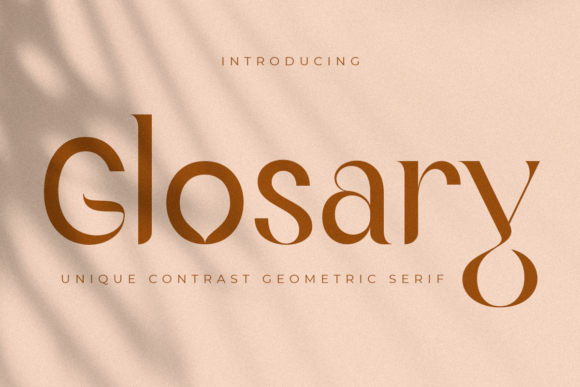
Glosary stands out because it doesn’t sacrifice warmth for minimalism. Its graceful curves—especially in the lowercase a, e, and s—add subtle personality without compromising readability. Unlike stark geometric sans serifs, Glosary has gentle contrast and open counters, making it highly legible even at small sizes: think 8pt candle labels, 12mm sticker text, or delicate foil-stamped gift tags. And unlike many display fonts, it holds up beautifully in longer phrases—perfect for welcome boards, menu cards, or printable planner headers.
Where Glosary Shines in Real Craft Projects
I’ve used Glosary across dozens of physical and digital product types—and each time, it quietly raised the perceived value. Here’s how it works in practice:
- Wedding & Event Stationery: Glosary is my go-to for invitation suites where couples want “elegant but not stuffy.” It pairs flawlessly with a delicate script font for names and a light serif for body text—creating hierarchy without clutter. I’ve printed it on cotton rag paper for save-the-dates and laser-cut it onto acrylic welcome signs with excellent edge clarity.
- Product Labels & Packaging: For my small-batch soap and candle line, Glosary delivers sophistication on tiny 1.5” x 0.75” oval labels. Its even weight distribution prevents thin strokes from vanishing during print or cut—no ghosting on matte vinyl or bleeding on kraft stickers.
- Digital Printables & SVG Bundles: When designing editable Canva templates or layered Silhouette Studio files, Glosary’s clean shapes scale cleanly from mobile previews to wall-sized art. Customers consistently comment that it “feels premium”—a subtle signal of quality before they even open the file.
- Seasonal & Boutique Merchandise: From holiday mug wraps to linen tote bag prints, Glosary reads clearly on textured surfaces. I’ve heat-pressed it onto organic cotton tees using basic plastisol transfers—and the curves stayed smooth, no pixelation or stroke distortion.
Practical Tips for Cutting, Printing & Pairing
If you’re using Glosary with cutting machines (Cricut, Silhouette, Brother ScanNCut), stick to the Regular or Bold weights for best results—avoid ultra-light variants for sub-10pt text. Always convert to outlines before exporting SVGs, especially if sharing editable files with customers. For small stickers or tag text under 14pt, test a 3–5 word phrase first: Glosary’s generous x-height and open apertures mean it stays legible where other sans serifs blur.
Font pairing is where Glosary truly flexes its versatility. Try it with:
- A flowing script font (like Lavanderia or Brittany Signature) for names or headings—Glosary grounds the flourish without competing.
- A warm, low-contrast serif (like Playfair Display or IBM Plex Serif) for body copy in printable guides or packaging inserts.
- A bold, condensed sans serif (like Montserrat Black) for contrasting callouts—Glosary’s softer rhythm makes the bold version pop even more.
For branding consistency, use Glosary across your shop banner, product tags, social media graphics, and email headers. That repetition builds recognition—customers begin associating its refined curves with your craftsmanship.
Licensing, Files & Real-World Readiness
Glosary is a commercial font, meaning it’s fully licensed for use in physical products you sell—candles, mugs, apparel, stickers—as well as digital downloads like Canva templates, SVG bundles, and editable PDF planners. Just verify your license covers both personal *and* commercial use (most premium fonts do, but always double-check the EULA). You’ll typically receive OTF and TTF files—both work reliably in design software and cutting machine platforms. If multilingual support matters for your audience (e.g., French accents on boutique tags or Spanish wedding wording), confirm Glosary includes extended Latin characters—it does.
While Glosary doesn’t include swashes or alternate glyphs, that’s actually a strength for crafters: fewer stylistic decisions mean faster production, consistent output, and zero risk of mismatched ligatures on cut files. Its simplicity is intentional—and deeply practical.
Whether you're hand-lettering a chalkboard sign and tracing it digitally, prepping a batch of 200 wedding place cards, or building a cohesive Etsy shop identity, Glosary supports your workflow—not complicates it. It doesn’t shout. It refines. It elevates. And in handmade markets where texture, tone, and trust matter as much as aesthetics, that quiet confidence is everything.